The check is only the start of the process
A walkaround system is not compliant just because drivers submit a form. The real control is the chain from inspection to defect assessment, repair, evidence and authority to use the vehicle again.
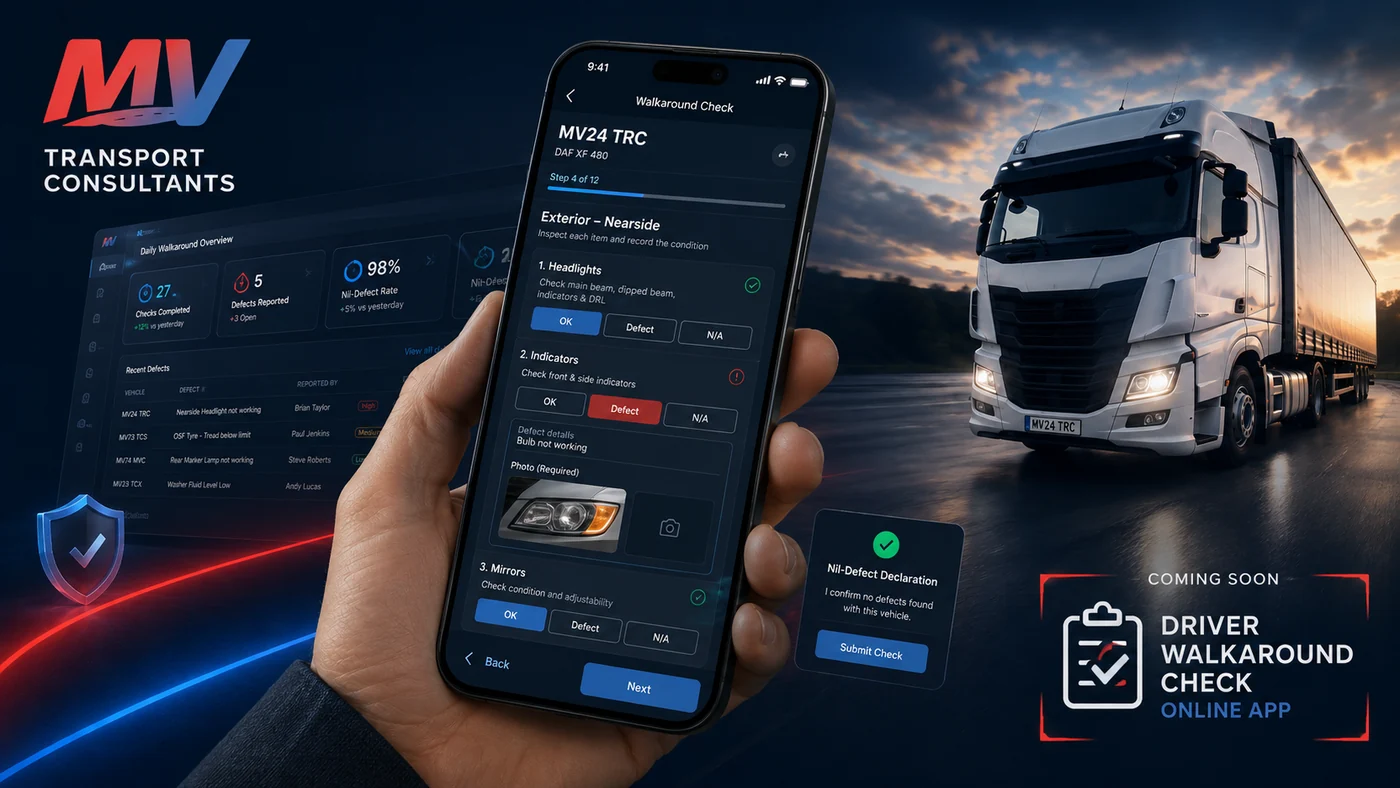
What the driver record should capture
- driver identity;
- vehicle and trailer registration or fleet number;
- date and time;
- odometer where required by company process;
- items checked and any not applicable;
- defect description and photographs where useful;
- nil-defect declaration where no faults are found;
- driver sign-off.
Defect assessment and VOR
Reported defects should reach a competent person who can decide whether the vehicle remains safe and legal to operate. Where the vehicle must not be used, the VOR status needs to be obvious to drivers, planners and the workshop.
Rectification evidence
The record should show what was repaired, by whom, when, and any parts or supporting evidence needed to demonstrate rectification. Avoid deleting or editing the original driver report. Add the repair trail to it.
Return to service
One of the weakest points in many systems is the final step. A repair invoice does not automatically show who confirmed the vehicle was fit to return to service. Record the final authorisation and date.
Use the data, do not just store it
Defect trends can identify weak walkaround checks, recurring component failures, workshop quality issues and individual vehicles that need closer attention. Management should review the pattern, not simply archive the reports.
Official guidance used for this article
Always check the latest official guidance before changing a compliance system.

Written by Mike Manning
Transport compliance consultant and Transport Manager supporting commercial vehicle operators with Operator Licence control, audits, FORS preparation and practical fleet systems.
About Mike and MV →