An audit should test the system, not just the paperwork
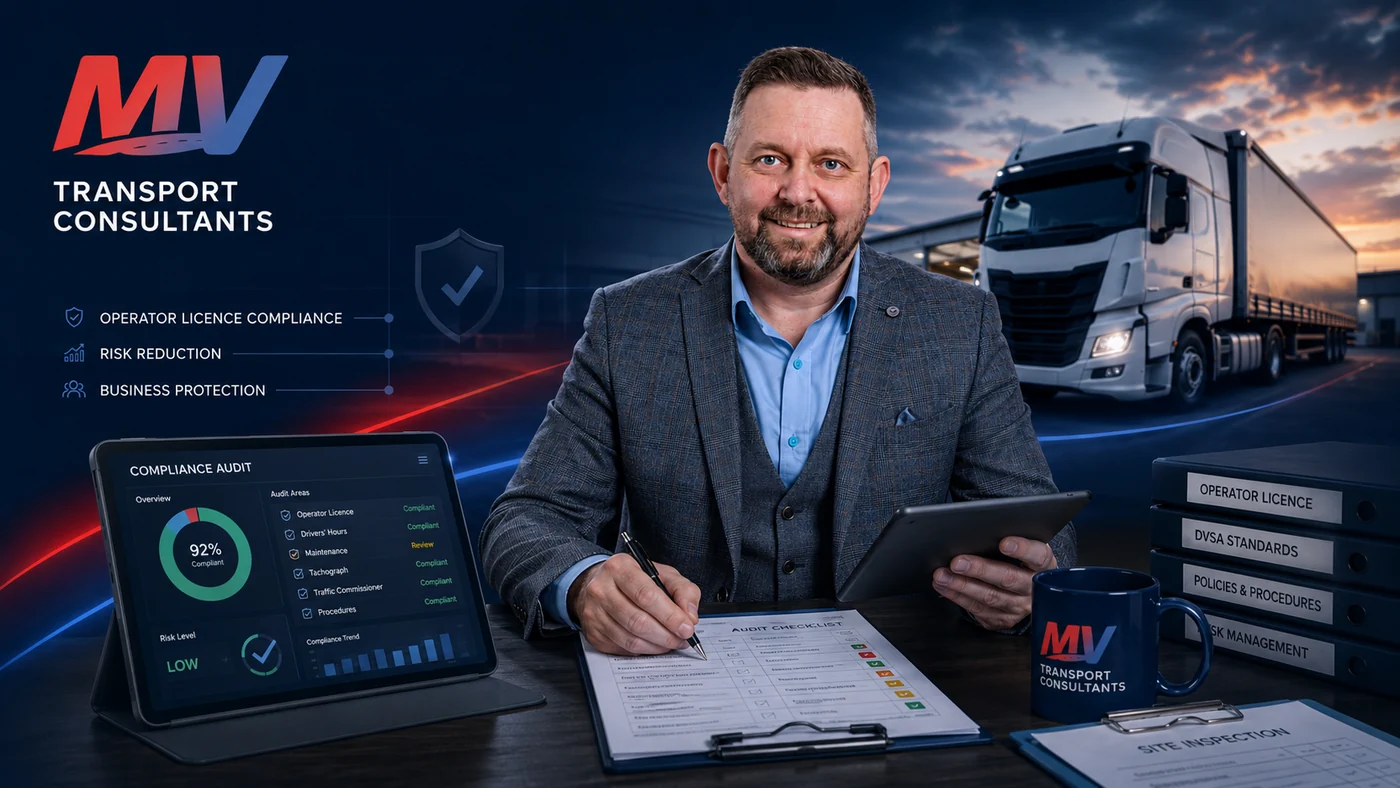
Independent audits are useful because they force the operation to prove that its systems work in practice. A folder containing policies is not enough if the records show missed inspections, poor defect closure or repeated drivers' hours problems.
The strongest audits sample evidence across a realistic period and follow issues through from detection to management action.
1. Operator Licence control
- correct legal entity, licence type and authorisations;
- vehicles and trailers in use against the licence;
- operating centres and parking arrangements;
- Transport Manager appointment and involvement where required;
- undertakings, conditions and any previous regulatory commitments;
- notification of material changes.
2. Maintenance and roadworthiness
- forward maintenance planner and declared PMI intervals;
- PMI completion, quality and evidence of defects being rectified;
- brake-test planning and results;
- MOT performance and investigation of failures;
- daily walkaround checks and nil-defect records;
- VOR controls and authority to return vehicles to service;
- maintenance-provider oversight rather than blind reliance on the workshop.
3. Driver compliance
- driving licence entitlement and checking process;
- Driver CPC and tachograph-card validity;
- induction and ongoing training;
- handbook or policy acknowledgement;
- fitness-to-drive controls and relevant declarations;
- disciplinary or corrective action where standards are not met.
4. Drivers hours, tachographs and working time
- download arrangements and analysis frequency;
- missing mileage and unknown driving;
- manual entries and mode use;
- infringement investigations rather than signatures alone;
- repeat-driver trends and management action;
- working-time controls and other-work declarations where relevant.
5. Management evidence
A good audit should finish with a prioritised action plan. Each weakness should have an owner, due date and evidence requirement. Red/amber/green grading can be useful, but only if the operator understands what moves an item from red to closed.
Official guidance used for this article
Always check the latest official guidance before changing a compliance system.

Written by Mike Manning
Transport compliance consultant and Transport Manager supporting commercial vehicle operators with Operator Licence control, audits, FORS preparation and practical fleet systems.
About Mike and MV →